Spreading the feast of the Charlotte Mason method of education through weekly podcasts. Join us for short discussions that provide information, examples, and encouragement to the homeschool parents putting CM's ideas into practice in their homes.
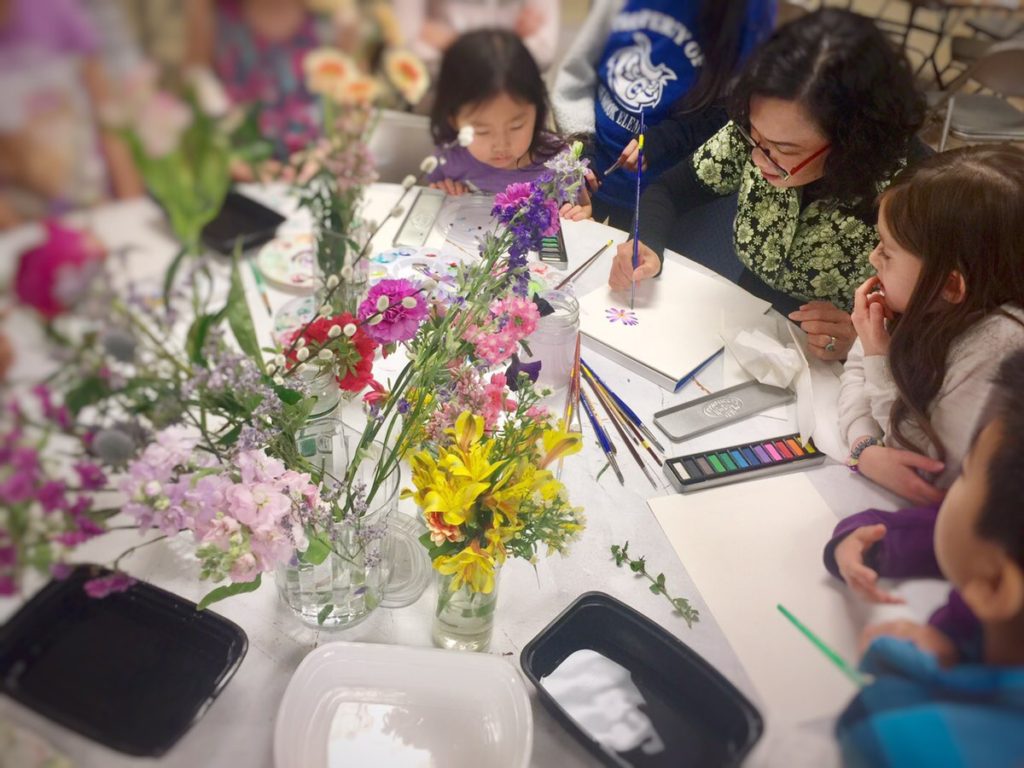
This episode of A Delectable Education Charlotte Mason Podcast is an interview with Min Hwang to explore her implementation of Charlotte Mason’s ideas in the children’s ministry of her church. Miss Mason reminds us of Christ’s command to “let the little children come to me and hinder them not,” and believed in the child’s inherent dignity and respect due to them as persons. Min has a special vision of how her method and subjects can make “Sunday school” a fertile growing time for these children to be introduced to and grow in Christ and His word.
Listen Now:
“But let the imaginations of children be stored with the pictures, their minds nourished upon the words, of the gradually unfolding story of the Scriptures, and they will come to look out upon a wide horizon within which persons and events take shape in their due place and in due proportion . By degrees, they will see that the world is a stage whereon the goodness of God is continually striving with the wilfulness of man; that some heroic men take sides with God ; and that others, foolish and headstrong, oppose themselves to Him. The fire of enthusiasm will kindle in their breast, and the children, too, will take their side, without much exhortation, or any thought or talk of spiritual experience.” (1/249)
“[T]heir Bible lessons should help them to realise in early days that the knowledge of God is the principal knowledge, and, therefore, that their Bible lessons are their chief lessons.” (1/251)
This is a monthly question and answer episode discussing how to interest our husbands in Charlotte Mason’s method, how to implement narration as an adult, and how and what can be done for children after school hours who attend a non-Charlotte Mason school.
Listen Now:
“Let the objector read an essay of Lamb’s, say, or of Matthew Arnold’s, Lycidas or the ‘ raven ‘ scene in Barnaby Rudge and then put himself to sleep or wile away an anxious or a dull hour by telling to himself what he has read. The result will be disappointing; he will have forgotten this and that turn of thought, link in the chain of argument, but he will know the whole thing in a surprising way ; the incidents, the figures, the delicate play of thought in the author will be brought out in his mind like the figures in the low relief which the sculptor produces from his block. He finds he has taken in ‘mind stuff’ which will come into use in a thousand ways perhaps as long as he lives.” (6/258-259)
“The War has forced new ideas upon us ; we begin, for instance, to realise the avidity of the adult mind for instruction; it was startling to read of 1,500 soldier candidates for twenty vacant places in a certain class. We begin to see that mind, the mind of all sorts and conditions of men, requires its rations, wholesome and regularly served.” (6/281)
“Some absorbing interest which shall keep our minds and senses healthily occupied and lead us to evergrowing knowledge of God’s universe, will add to the healthfulness of a holiday…While freedom and spontaneous enjoyment should still be distinctive of our holiday-season, there are ways in which, without any sacrifice of the spirit of either, a parent or tutor may give a direction to a [student’s] impulses which shall lead him to unfailing sources of delight and improvement.” (PR 4/513, 514)
“…the child shall be allowed to be alone with children and Nature a good part of every day. [Holidays will be most enjoyed, however,] if one hour or so every day is given to some fixed employment, of a kind as far as possible outside the ordinary school curriculum.” (PR 14/894-901)
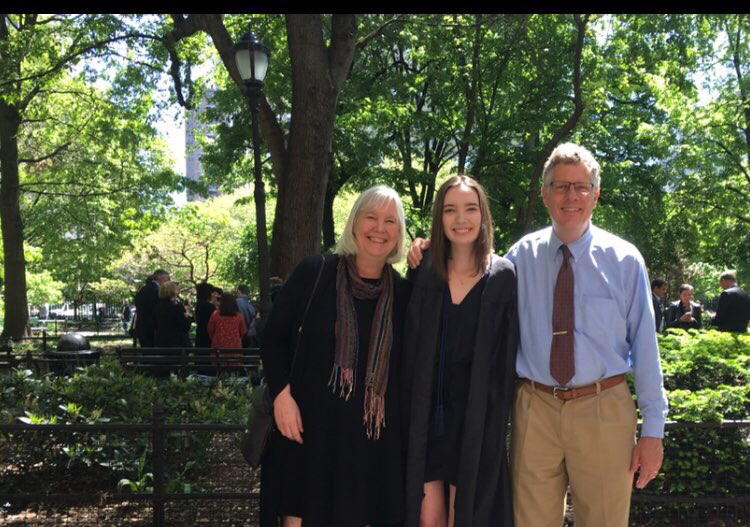
This week’s Charlotte Mason podcast is an interview with a college graduate. Liz talks with Emma about her upbringing with Charlotte Mason’s method, how that prepared her for her future academic and job pursuits, and how Miss Mason’s lifestyle is continuing to nourish Emma’s life.
Listen Now:
{Emma Buckingham}{Emma with her parents, Bonnie and Ken Buckingham, at her college graduation}
Charlotte Mason included folk dance in the wide and varied feast. Today’s interview with Sandra Sosa explores some of the enormous range of possibilities that open up to us when we consider making dancing a part of our education. Her contagious enthusiasm will inspire even the most bashful among us to get moving and add a joyous element to our lives.
Listen Now:
“Therefore, children should learn dancing … at an early age. The subject of the natural training of eye and muscles was taken up pretty fully in treating of ‘Out-of-Door Life.’ I will only add, that to give the child pleasure in light and easy motion…dancing, drill, calisthenics, some sort of judicious physical exercise, should make part of every day’s routine.” (1/113)
“Dancing, and the various musical drills, lend themselves to grace of movement, and give more pleasure…to the little people.” (1/315)
“No education, but self-education,” said Charlotte Mason. What does this mean in our schoolroom, in our daily lives? Listen to the discussion of what we are really aiming for in the education of our children.
Listen Now:
An Essay Towards a Philosophy of Education (Volume 6), Book I, Chapter I
“No one knoweth the things of a man but the spirit of a man which is in him; therefore, there is no education but self-education, and as soon as a young child begins his education he does so as a student.” (6/26)
“[G]ive your child a single valuable idea, and you have done more for his education than if you had laid upon his mind the burden of bushels of information; for the child who grows up with a few dominant ideas has his self-education provided for, his career marked out.” (1/174)
“Our deadly error is to suppose that we are his showman to the universe; and, not only so, but that there is no community at all between child and universe unless such as we choose to set up.” (3/188)
“The children, not the teachers, are the responsible persons; they do the work by self-effort. The teachers give sympathy and occasionally elucidate, sum up or enlarge, but the actual work is done by the scholars.” (6/6)
“A person is not built up from without but from within, that is, he is living, and all external educational appliances and activities which are intended to mould his character are decorative and not vital.” (6/23)
“One thing at any rate we know with certainty, that no teaching, no information becomes knowledge to any of us until the individual mind has acted upon it, translated it, transformed, absorbed it, to reappear, like our bodily food, in forms of vitality. Therefore, teaching, talk and tale, however lucid or fascinating, effect nothing until self-activity be set up; that is, self-education is the only possible education; the rest is mere veneer laid on the surface of a child’s nature.” (6/240)
“…no effort at self-education can do anything until one has found out this supreme delightfulness of knowledge.” (6/347)
“The question is not,––how much does the youth know? when he has finished his education––but how much does he care? and about how many orders of things does he care?” (3/170-171)
“…the motto-” I am, I can, I ought, I will,” has had much effect in throwing children upon the possibilities, capabilities, duties and determining power belonging to them as persons.” (6/29)
“Naturally, each of us possesses this mind-stuff only in limited measure, but we know where to procure it ; for the best thought the world possesses is stored in books ; we must open books to children, the best books ; our own concern is abundant provision and orderly serving.” (6/26)
“If the list be short, the scholar will not get enough mind-stuff; if the books are not various, his will not be an all-round development ; if they are not original, but compiled at second hand, he will find no material in them for his intellectual growth.” (6/303)
“A corollary of the principle that education is the science of relations, is, that no education seems to be worth the name which has not made children at home in the world of books , and so related them, mind to mind, with thinkers who have dealt with knowledge.” (3/226)
“Our part is to remove obstructions and to give stimulus and guidance to the child who is trying to get in touch with the universe of things and thoughts which belongs to him.” (3/188)
“Attention is not the only habit that follows due self-education. The habits of fitting and ready expression, of obedience, of good-will, and of an impersonal outlook are spontaneous by-products of education in this sort. So, too, are the habits of right thinking and right judging; while physical habits of neatness and order attend upon the self-respect which follows an education which respects the personality of children.” (6/100)
“In proportion as he is made aware of the laws which rule every relationship, will his life be dutiful and serviceable: as he learns that no relation with persons or with things, animate or inanimate , can be maintained without strenuous effort, will he learn the laws of work and the joys of work.” (3/187-188)
“…so soon as the child can read at all, he should read for himself, and to himself, history, legends, fairy tales, and other suitable matter.” (1/227)
“People are naturally divided into those who read and think and those who do not read or think ; and the business of schools is to see that all their scholars shall belong to the former class; it is worth while to remember that thinking is inseparable from reading which is concerned with the content of a passage and not merely with the printed matter.” (6/31)
“Knowledge is not sensation, nor is it to be derived through sensation ; we feed upon the thoughts of other minds ; and thought applied to thought generates thought and we become more thoughtful. No one need invite us to reason, compare, imagine; the mind, like the body, digests its proper food, and it must have the labour of digestion or it ceases to function.” (6/26)