
Episode 113: Service, An Interview with Vanessa Kijewski


Charlotte Mason’s educational method encompasses all of life. This podcast episode explores the possibilities of sharing and showing love as a family through acts of mercy and service to our neighbors near and far through an interview with friend and Mason educating mom of six, Vanessa Kijewski, who shares her experiences in training her children to give.

Listen Now:

“A child who is taught from the first the delights of giving and sharing, of loving and bearing, will always spend himself freely on others, will love and serve, seeking for nothing again; but the child who recognises that he is the object of constant attention, consideration, love and service, becomes self-regardful, self-seeking, selfish, almost without his fault, so strongly is he influenced by the direction his thoughts receive from those about him.” (2/288)

“The tender sympathy of the child must be allowed to flow in ways of help and kindness towards all life that anyway touches his. I knew a little girl of five, who came in from her walk under an obvious cloud of distress. ‘What is the matter, H––?’ she was asked. A quick little ‘Nothing,’ with the reticence of her family, was all that could be got out of her for some minutes; but a caress broke her down, and, in a passion of pity, she sobbed out, ‘A poor man, no home, no food, no bed to lie upon!’ Young as she was, the revelation of the common life in humanity had come upon her; she was one with the beggar and suffered with him. Children must, of course, be shielded from intense suffering, but woe to mother or nurse who would shield, by systematically hardening, the child’s heart. This little girl had the relief of helping, and then the pain of sympathy ceased to be too much for her.” (2/265)

“Love desires to give and serve; the gifts and the service vary with the age and standing of the friends; the child will bring the gift of obedience, the parent may have to offer the service of rebuke, but the thought of service is always present to Love. “Love not in word, neither in tongue,” says the Apostle, “but in deed and in truth”; that is, perhaps, “Do not rest content with the mere expression of love, whether in word or caress, but show your love in service and in confidence”; for the love that does not trust is either misplaced or unworthy. Love has other signs, no doubt, but these are true of all true love, whether between parent and child, friend and friend, married lovers, or between those who labour for the degraded and distressed and those for whom they labour. Let us notice the word degradation: it is literally to step from, to step down, and it is really a word of hope, for if it is possible to step down, it is also possible to step up again. All the great possibilities of Love are in every human heart, and to touch the spring, one must give Love.” (4/1/85)

“We owe knowledge to the ignorant, comfort to the distressed, healing to the sick, reverence, courtesy and kindness to all men, especially to those with whom we are connected by ties of family or neighbourhood; and the sense of these dues does not come by nature.” (3/85)

“Nothing is trivial that concerns a child; his foolish-seeming words and ways are pregnant with meaning for the wise. It is in the infinitely little we must study in the infinitely great; and the vast possibilities, and the right direction of education, are indicated in the open book of the little child’s thoughts.” (1/5)

Ourselves, Book I, Part III, Section II: Justice (Volume 4)

Love desires to give and serve by Vanessa Kijewski

The Ministering Children’s League (PR 2)
The Ministering Children’s League (PR 10)

The Ministering Children’s League (PR 14)

Episode 112: Notebooks and Paperwork, Part 2


This podcast episode on Charlotte Mason’s method is the second part for discussion of paperwork and notebooks. In particular, Emily addresses all the things that help our children keep track of history chronology, and Liz and Nicole share ways they have managed the organization of papers and notebooks throughout the years.

Listen Now:

“The frame-work will prevent the events, which are given out of their historical order, from being shaken together into chaos. It requires considerable thinking power to understand time-relations in history.” (Beale, 604)

“The book should always be deeply interesting, and when the narration is over, there should be a little talk…pictures shown to illustrate the lesson, or diagrams drawn on the blackboard.” (1/233)

Home Education (Volume 1), p. 292

Towards a Philosophy of Education (Volume 6), pg. 177

Bernau’s Article on the Book of Centuries With much gratitude to the Charlotte Mason Institute for making this PDF available

Beale’s Article on the Teaching of Chronology With much gratitude to the Charlotte Mason Institute for making this PDF available

H.B.’s Article on the Teaching of History With much gratitude to the Charlotte Mason Institute for making this PDF available

Keeping Time: History Tools Teacher Training Video

Riverbend Press’ Streams of History Chart

Laurie Bestvater’s Book of Centuries

Another Book of Centuries from Riverbend Press

Hundred Squares Chart (Century Chart)

Episode 111: Notebooks and Paperwork, Part 1


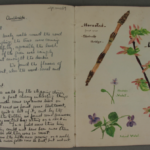
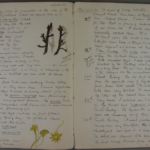
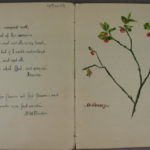
This Charlotte Mason education podcast focuses on the papers, the recordings, and drawings–all the reproductions of knowledge in the making. In particular, Liz, Nicole, and Emily address the explicitly described or preserved examples of various notebooks Mason’s students used from which we can glean ideas to benefit our own students today.

Listen Now:


“It is very helpful to read with a commonplace book or reading-diary, in which to put down any striking thought in your author, or your own impression of the work, or of any part of it; but not summaries of facts. Such a diary, carefully kept through life, should be exceedingly interesting as containing the intellectual history of the writer; besides, we never forget the book that we have made extracts from, and of which we have taken the trouble to write a short review.” (5/260)

“The children keep a dated record of what they see…” (3/236)

“Children should be encouraged to watch, patiently and quietly, until they learn something of the habits and history of bee, ant, wasps, spider, hairy caterpillar, dragonfly, and whatever of larger growth comes in their way.” (1/57)

“Let all he finds out about it be entered in his diary—by his mother, if writing be a labour to him,—where he finds it, what it is doing, or seems to him to be doing; it’s colour, shape, legs: someday he will come across the name of the creature and will recognize the description of an old friend.” (1/58)

“These note-books are a source of pride and joy, and are freely illustrated by drawings (brushwork) of twig, flower, insect, etc.,” (3/236)

“A flower and bird list should always be kept, and also any other lists which interest the individual-fungi, birds’ nests, insects, animals, fossils, etc. These lists work best kept in columns, with the name, number, and date of finding all on one line, and the next underneath and so on. Latin names, and names of families are a great help in classification and Latin names for flowers are invaluable, especially in cases where a single flower has a different name in practically every county.” (The Charm of Nature Study by G. Dowton, The Parents’ Review, Volume 41, 1930)

“In Science, or rather, nature study, we attach great importance to recognition, believing that the power to recognise and name a plant or stone or constellation involves classification and includes a good deal of knowledge. To know a plant by its gesture and habitat, its time and its way of flowering and fruiting; a bird by its flight and song and its times of coming and going; to know when, year after year, you may come upon the redstart and the pied fly-catcher, means a good deal of interested observation, and of; at any rate, the material for science.” (3/236)

“Calendars.––It is a capital plan for the children to keep a calendar––the first oak-leaf, the first tadpole, the first cowslip, the first catkin, the first ripe blackberries, where seen, and when. The next year they will know when and where to look out for their favourites, and will, every year, be in a condition to add new observations. Think of the zest and interest, the object, which such a practice will give to daily walks and little excursions. There is hardly a day when some friend may not be expected to hold a first ‘At Home.’” (1/54)

“Let him never work with figures the notation of which is beyond him, and when he comes to ‘carry’ in an addition or multiplication sum, let him not say he carries ‘two’ or ‘three,’ but ‘two tens,’ or ‘three hundreds,’ as the case may be.” (1/259)

For the Love of Physics, Walter Lewin

Emily’s Bird & Flower List Notebook

(*Affiliate Links)

The Charm of Nature Study, G. Dowton, The Parents’ Review, Volume 41

P.U.S. Programme 105

Nature Work at the House of Education, H.D. Geldart, The Parents’ Review, Volume 9

Some examples of HOE Nature Note-Books:

Episode 98: Drawing

Blog Post with Bird and Flower List examples

Sabbath Mood Homeschool’s Blog Post on the Science Notebook

Riverbend Press (email for notebooks)

Irene Stephens’ Article on Teaching Math

Episode 110: Listener Q&A #23


This week’s Charlotte Mason podcast episode is another Q&A session with Liz, Nicole, and Emily, notably:  is it okay to start a Mason education midyear? are the special studies books too simple and demeaning to our child’s intelligence? and what about a passage in Mason’s writings  that contradicts ideas she shares in other places?

Listen Now:

“Not what we have learned, but what we are waiting to know is the delectable part of knowledge.” (3/224)

“The real use of naturalists’ books at this stage is to give the child delightful glimpses into the world of wonders he lives in, to reveal the sorts of things to be seen by curious eyes, and fill him with desire to make discoveries for himself. There are many to be had, all pleasant reading, many of them written by scientific men, and yet requiring little or no scientific knowledge for the enjoyment.” (1/64)

“Away with books, and ‘reading to’–for the first five or six years of life. The endless succession of story-books, scenes, shifting like a panorama before the child’s vision, is a mental and moral dissipation; he gets nothing to grow upon, or is allowed no leisure to digest what he gets.” (5/216)

“The endless succession of storybooks, scenes, shifting life a panorama before the child’s vision, is a mental and moral dissipation; he gets nothing to grow upon, or is allowed no leisure to digest what he gets.” (5/217)

“They must grow up upon the best. There must never be a period in their lives when they are allowed to read or listen to twaddle or reading-made-easy. There is never a time when they are unequal to worthy thoughts, well put; inspiring tales, well told…and we shall train a race of readers who will demand literature–that is, the fit and beautiful expression of inspiring ideas and pictures of life.” (2/263)

“In the first place, it is not her business to entertain the little people: there should be no storybooks, no telling of tales, as little talk as possible…” (1/45)

“The mischief begins in the nursery. No sooner can a child read at all than hosts of friendly people show their interest in him by a present of a ‘pretty book.’ A ‘pretty book’ is not necessarily a picture-book, but one in which the page is nicely broken up in talk or short paragraphs. Pretty books for the schoolroom age follow those for the nursery, and, nursery and schoolroom outgrown, we are ready for ‘Mudies’ lightest novels; the succession of ‘pretty books never fails us; we have no time for works of any intellectual fibre, and we have no more assimilating power than has the schoolgirl who feeds upon cheesecakes.” (5/214)

“Guard the nursery; let nothing in that has not the true literary flavour; let the children grow up on a few books read over and over, and let them have none, the reading of which does not cost an appreciable mental effort.” (5/215)

“‘Books for the young’ used to be few and dull; now, they are many and delightful.” (5/215)

Formation of Character (Volume 5), Part III, Chapter I

Gathering Moss

A Field Guide to Bird Songs (CD)

First Look at Books by Millicent Selsam

(*Affiliate Links)

Science, A Vast and Joyous Realm Teacher Training Video

A Vision for Children Teacher Training Video

Episode 109: The Duties of a Teacher

This Charlotte Mason education podcast episode explores our responsibilities in teaching. If we have agreed to take on homeschooling as our work, what are the attitudes and practices that will make us good at our job?

Listen Now:


“Our co-operation appears to be the indispensable condition of all the divine workings….
The contrary is equally true. Such teaching as enwraps a child’s mind in folds of many words that his thought is unable to penetrate, which gives him rules and definitions, and tables, in lieu of ideas––this is teaching which excludes and renders impossible the divine co-operation.”(2/274)

“As we have had occasion to say before, in this great work of education parents and teachers are permitted to play only a subordinate part after all. You may bring your horse to the water, but you can’t make him drink; and you may present ideas of the fittest to the mind of the child; but you do not know in the least which he will take, and which he will reject. And very well for us it is that this safeguard to his individuality is implanted in every child’s breast. Our part is to see that his educational plat is constantly replenished with fit and inspiring ideas, and then we must needs leave it to the child’s own appetite to take which he will have, and as much as he requires.” (3/127)

“The task God has given to mothers must always be the most responsible committed to any human being. It is nothing less than the training for His Service of His own children–children whose bodies must be sound and healthy, whose minds must be disciplined and alert, whose souls if they are to fulfill the purpose for which He has sent them here” (In Memoriam)

“Now, the eager soul who gives attention and zeal to his work often spoils its completeness by chasing after many things when he should be doing the next thing in order. … It is well to make up our mind that there is always a next thing to be done, whether in work or play; and that the next thing, be it ever so trifling, is the right thing; not so much for its own sake, perhaps, as because, each time we insist upon ourselves doing the next thing, we gain power in the management of that unruly filly, Inclination.” (4a/171)

“We are waking up to our duties and in proportion as mothers become more highly educated and efficient, they will doubtless feel the more strongly that the education of their children during the first six years of life [although I would propose that she means this for all of the years we educate our children] is an undertaking hardly to be entrusted to any hands but their own. And they will take it up as their profession––that is, with the diligence, regularity, and punctuality which men bestow on their professional labours.” (1/3)

“But we are not a faint-hearted body; we mean, and mean intensely; and to those who purpose the best, and endeavour after the best, the best arrive.” (3/148)

“The mother is qualified,” says Pestalozzi, “and qualified by the Creator Himself, to become the principal agent in the development of her child; … and what is demanded of her is––a thinking love … God has given to the child all the faculties of our nature, but the grand point remains undecided––how shall this heart, this head, these hands be employed? to whose service shall they be dedicated? A question the answer to which involves a futurity of happiness or misery to a life so dear to thee. Maternal love is the first agent in education.” (1/2)

…”in the faith that mothers work wonders once they are convinced that wonders are demanded of them. (1/44)

In Memoriam

(*Affiliate Links)

Episode 3: The Role of the Teacher

Episode 26: Charlotte Mason–Food for Mothers

Episode 32: The Perilous Privilege of Mothering